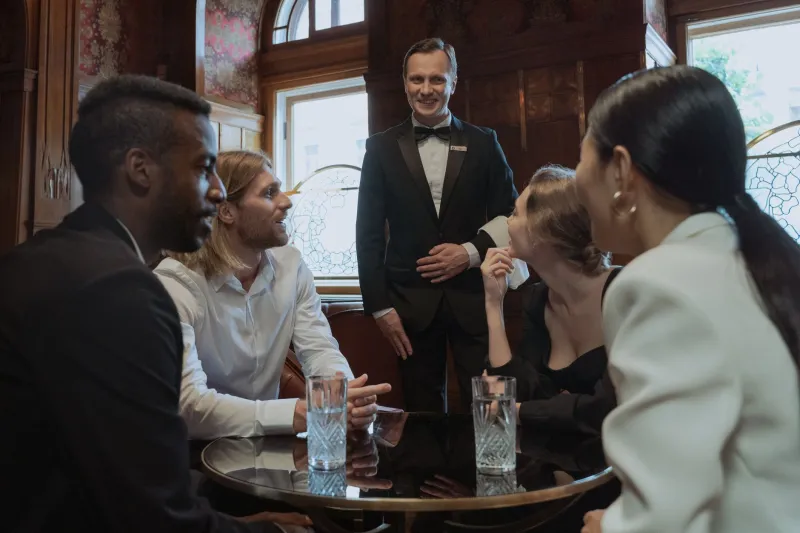
Every Move You Make Is Being Evaluated: The Behavioral Due Diligence Happening at Your Next Business Banquet
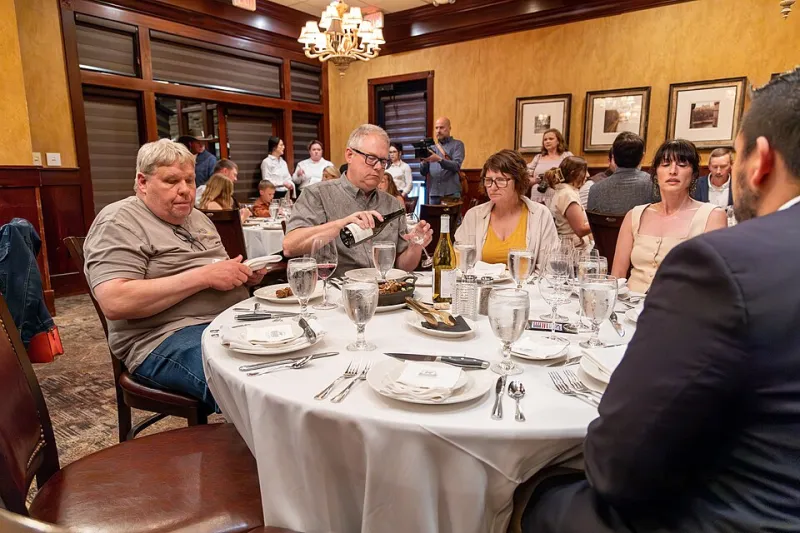
Photo: USDAgov, Public domain, via Wikimedia Commons
There is a reason that some of America's most consequential funding decisions are preceded by a dinner invitation rather than a formal boardroom presentation. The boardroom is a controlled environment — rehearsed, polished, and carefully managed. The banquet table is not. And that distinction is precisely the point.
For investors, corporate directors, and senior executives who have spent decades reading people across conference tables, the business banquet offers something far more valuable than a pitch: it offers unguarded behavior. Over the course of a single evening, a discerning observer can learn more about a founder's leadership character, emotional intelligence, and professional integrity than six months of formal meetings might reveal.
This is the invisible interview. And most people attending these events have no idea it is already underway.
The Moment the Evaluation Begins
Experienced dealmakers rarely wait for the entrée to begin forming impressions. The assessment starts the moment an attendee enters the room. How does a guest navigate an unfamiliar social environment? Do they scan for the most prominent name badge in the room and make a beeline, or do they take a moment to orient themselves before engaging? Do they greet the event coordinator with the same warmth they extend to the keynote speaker?
These early observations are not trivial. They establish a behavioral baseline — a picture of how a person operates when the stakes feel lower and the social script is less defined. Savvy investors use this baseline to compare against the version of a person who appears later in the evening, once the wine has been poured and the professional guard has softened.
The divergence between these two versions is often more instructive than either one alone.
How You Treat Waitstaff Is a Leadership Litmus Test
Among the behavioral signals that veteran dealmakers cite most consistently, the treatment of service staff ranks near the top. This is not sentiment — it is strategy. How a guest interacts with a server, a bartender, or a banquet coordinator reveals a precise set of leadership characteristics: patience, situational awareness, gratitude, and the ability to treat people equitably regardless of perceived status.
A founder who interrupts a server mid-sentence, snaps to get attention, or fails to acknowledge a refilled water glass is demonstrating a hierarchical worldview that experienced investors recognize as a downstream operational risk. The same person who treats junior employees dismissively in a social setting is unlikely to build the kind of inclusive, high-retention culture that scales.
Conversely, a guest who thanks the server by name, accommodates a menu error without visible frustration, and maintains eye contact during a brief exchange is signaling something equally important: the capacity to lead people at every level of an organization with dignity.
This is not a minor data point. It is a character reference that the candidate never knew they were providing.
Disagreement as a Window Into Decision-Making
Business banquets inevitably surface moments of intellectual friction — a debate over market conditions, a disagreement about regulatory trends, a politely contested claim about an industry's trajectory. These moments are not inconvenient interruptions to the evening. For the most attentive observers in the room, they are the evening's most valuable chapters.
The question is never whether a person holds strong opinions. Strong opinions are welcome at the business table. The question is how those opinions are held and how they respond when challenged. Does the individual listen to a counterpoint with genuine curiosity, or do they wait for a pause in the speaker's sentence to reassert their original position? Do they acknowledge merit in a competing perspective, or does intellectual concession register as personal defeat?
Entrepreneurs who cannot disagree gracefully at a dinner table are unlikely to manage investor pushback, board-level dissent, or market pivots with the composure that sustained growth demands. Investors know this. They watch for it deliberately.
Handling Interruption and Uncertainty
A business banquet is inherently unpredictable. Conversations are interrupted. Introductions arrive at inopportune moments. A seating arrangement shifts at the last minute. A question catches a guest off guard. These micro-disruptions are not accidents — they are the social environment operating as it naturally does. But they also function as informal stress tests.
The executive who recalibrates smoothly when a conversation is interrupted, who fields an unexpected question without visible discomfort, and who adapts to a changed seating plan without registering frustration is demonstrating the same composure they will need when a product launch hits a wall or a key hire resigns two weeks before a funding close.
Uncertainty management is one of the most bankable leadership qualities in the American business landscape. Investors who have been burned by founders who fell apart under pressure are acutely attuned to how candidates behave when the evening does not go exactly as planned.
The Deal-Breakers That Never Make It Into the Debrief
Some behavioral red flags are significant enough that they end conversations before they begin — yet they are rarely articulated explicitly. A guest who dominates every exchange at a table of eight is not demonstrating confidence; they are demonstrating an inability to create space for others, which translates directly to boardroom dynamics. A person who name-drops excessively without being asked reveals an insecurity about their own standing that raises questions about how they will represent a company under scrutiny.
Other quiet deal-breakers include excessive alcohol consumption at formal events, the casual dismissal of a competitor's achievement, and the habit of checking a phone during substantive conversation. Each of these behaviors, observed once, might be forgiven. Observed across an evening, they accumulate into a portrait that no follow-up pitch can fully repaint.
What Deal-Makers Actually Look Like at the Table
The individuals who leave a business banquet with accelerated relationships and open doors tend to share a recognizable set of behaviors. They ask more questions than they answer. They introduce other guests to each other without positioning themselves as the bridge. They speak precisely about their own work without overstating it. They handle the unexpected — a spilled glass, a changed topic, a difficult question — with a lightness that signals genuine psychological security.
These are not performance techniques. They are the outward expression of a professional identity that has been built deliberately over time. And they are visible to anyone paying attention.
Conduct Yourself as Though the Decision Is Already Being Made
The most useful reframe for any business banquet attendee is a simple one: the evaluation is not something that happens after the evening ends. It is happening in real time, across every course, in every exchange, through every unrehearsed moment the evening produces.
The résumé describes who you have been. The pitch deck describes what you plan to build. But your behavior at the table describes who you actually are — and for the investors and executives across from you, that is the only document that truly matters.