What You Serve Speaks Before You Do: The Strategic Art of Menu Curation at High-Stakes Business Banquets
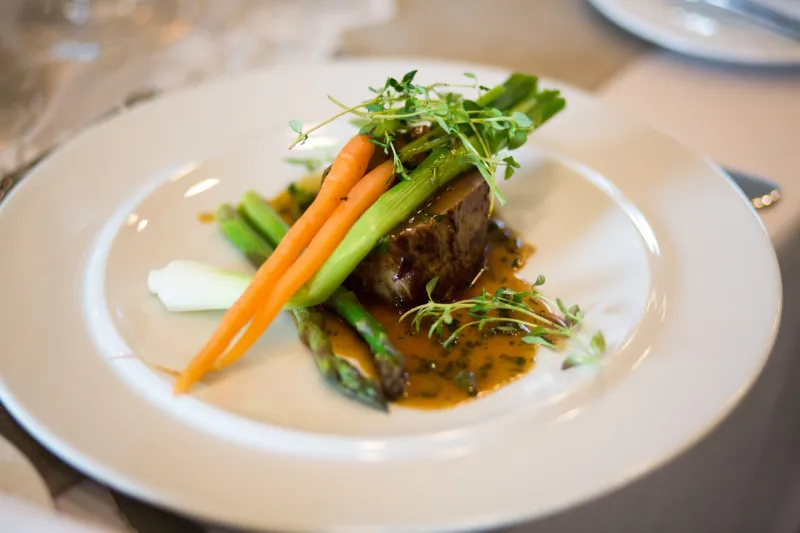
Long before a term sheet is drafted or a handshake closes the evening, something quieter has already been negotiating on your behalf. It sits at the center of the table. It arrives in courses. It carries the provenance of a particular farm in the Hudson Valley or the unmistakable heat of a Oaxacan pepper sourced from a supplier three time zones away. The menu — often treated as a logistical afterthought — is, in the hands of a deliberate host, one of the most powerful strategic instruments available at a business banquet.
At Business Builders Banquet, we have observed what separates the hosts who close deals from those who merely host dinners. Invariably, the difference is intentionality — and nowhere is that intentionality more precisely expressed than in the food served.
The Plate as a Positioning Statement
Consider what a menu communicates before a single word of business is spoken. A host who opens with a chilled oyster course sourced from the Chesapeake Bay is not simply offering an appetizer. That choice signals regional pride, attention to sourcing, and a willingness to invest in quality. For a guest evaluating whether to enter a long-term partnership, these signals register — consciously or not.
Conversely, a generic catered spread of undistinguished proteins and uninspired sides communicates something equally clear: that the host did not think deeply about this gathering, or about the people in the room. In high-stakes business environments, where every detail is filtered through the lens of judgment, that perception carries real cost.
America's most seasoned dealmakers understand this dynamic intuitively. When a private equity principal hosts a dinner in Charleston, South Carolina, and leads with a low-country boil featuring locally harvested blue crab, that decision anchors the evening in a specific cultural identity. It says: I belong here. I know this place. You can trust my judgment. That kind of credibility is rarely achieved through a PowerPoint deck.
Regional Identity as a Trust-Building Tool
One of the most underutilized strategies in American business entertaining is the deliberate use of regional cuisine to establish authenticity and cultural fluency. Hosts who source ingredients locally — whether from a family-owned ranch in Texas Hill Country, a small-batch cheesemaker in Vermont, or an urban vertical farm in Chicago — demonstrate a level of engagement with their environment that resonates deeply with guests who value substance over performance.
This is especially consequential when entertaining out-of-town investors or prospective partners unfamiliar with a particular market. A well-curated regional menu serves as an implicit briefing. It communicates that the host is embedded in their community, that their business relationships extend beyond boardrooms, and that they possess the kind of local intelligence that cannot be acquired from a distance.
For entrepreneurs seeking funding from coastal institutional investors, this regional authenticity can be a decisive differentiator. It signals that the business is genuinely rooted — not a concept in search of a geography.
International Influences and the Signal of Sophistication
Where regional menus communicate rootedness, internationally influenced courses signal something different but equally valuable: global awareness and cross-cultural fluency. A host who incorporates Japanese omakase-style pacing into a business dinner, or who opens with a Moroccan-spiced amuse-bouche before transitioning to a classic American main course, is demonstrating that their thinking is not parochial.
In deal-making contexts that involve cross-border transactions, foreign investment, or international expansion, this kind of culinary cosmopolitanism sends a clear message to guests: I understand the world beyond this table, and I am comfortable operating within it.
The key is coherence. The most effective menus do not blend influences randomly. They tell a story — one that mirrors the host's business narrative. An executive leading a company with operations across Southeast Asia and the American Midwest might construct a menu that honors both identities, course by course, creating a dining experience that functions as a living metaphor for the business itself.
Dietary Consideration as a Form of Respect
Among the more nuanced signals a host can send is the degree to which a menu accommodates the dietary needs and preferences of guests. In contemporary American business culture, where wellness, religious observance, and ethical consumption intersect in complex ways, a host who proactively addresses these considerations — without making them the focal point of conversation — demonstrates a quality that investors and partners prize above nearly all others: the capacity to anticipate.
Great operators do not wait to be told what a client needs. They research, prepare, and deliver. A menu that quietly includes a plant-based option alongside the primary protein, that avoids common allergens without drawing attention to the accommodation, communicates that the host has done the work before the room filled. That is a powerful signal in any deal-making context.
A Practical Framework for Hosts
For executives and entrepreneurs preparing to host a high-stakes business banquet, the following framework offers a starting point for aligning menu choices with deal-making objectives.
Define your narrative first. Before selecting a single dish, articulate what story you want this evening to tell. Are you establishing local authority? Demonstrating global reach? Signaling operational discipline? Your menu should serve that narrative.
Research your guests. Understand not only dietary restrictions but cultural backgrounds, regional origins, and known preferences. A guest who grew up in New Orleans will respond differently to a Gulf Coast shrimp preparation than one raised in Minneapolis. Personalization, even at scale, is possible — and memorable.
Invest in provenance. Knowing where your ingredients come from, and being able to speak to that sourcing naturally during the meal, transforms a dinner into a demonstration of values. Guests who share a concern for sustainability, community investment, or craft production will notice. Those who do not share those values will still register the care.
Sequence with intention. The pacing of a menu mirrors the arc of a negotiation. Light, accessible opening courses invite conversation. Richer, more complex dishes in the middle of a meal correspond to deeper engagement. A thoughtful dessert course — particularly one tied to a personal story or regional tradition — creates the kind of emotional resonance that outlasts the evening.
Avoid the generic. Nothing signals indifference more efficiently than a menu that could have been served at any gathering, for any guest, in any city. Distinctiveness is not extravagance. It is evidence of thought.
The Meal That Outlasts the Meeting
The deals that emerge from Business Builders Banquet events are rarely the product of a single conversation. They are the cumulative result of impressions — trust built across courses, credibility established through detail, and relationships deepened by the experience of sharing something genuinely considered.
The menu is not decoration. It is not logistics. It is, for the host who understands its potential, a strategic instrument as consequential as any term in an agreement. Serve accordingly.