Dinner Due Diligence: The Silent Scorecard Investors Keep When Breaking Bread With Founders
The pitch deck has been reviewed. The financials have been stress-tested. The market opportunity has been debated in conference rooms and over video calls. Yet for a significant number of venture capitalists and angel investors operating across the United States, the final — and often most decisive — round of evaluation does not take place in a boardroom. It unfolds over a shared meal.
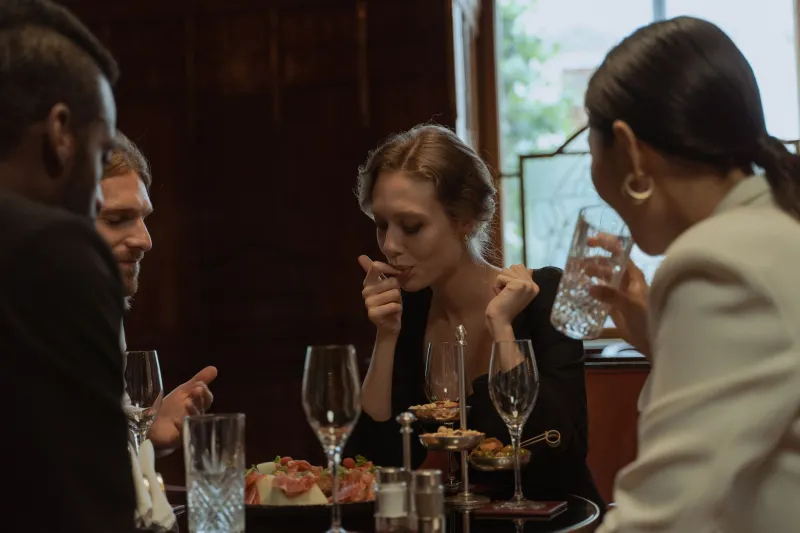
Business dinners and banquet events have long served as informal extensions of the due diligence process. What many founders fail to appreciate, however, is just how structured and deliberate that informal assessment can be. Investors are not simply relaxing over a plate of food. They are observing, cataloging, and drawing conclusions about the human being sitting across from them — conclusions that will follow that founder long after the dessert course is cleared.
The Myth of the "Casual" Business Dinner
Among the most costly misconceptions a founder can carry into a high-stakes business dinner is the belief that the evening is a reprieve from scrutiny. In reality, the shift from a formal meeting to a shared table often intensifies the evaluation rather than softening it.
Seasoned investors understand that professional settings invite rehearsed behavior. A founder presenting in a conference room has prepared their talking points, anticipated objections, and managed their body language with deliberate care. A dinner, by contrast, introduces variables that cannot be scripted — a slow kitchen, an incorrect order, a noisy adjacent table, a conversational detour into unfamiliar territory. These disruptions are not inconveniences. For a discerning investor, they are data points.
The way a founder responds when the evening does not go according to plan reveals considerably more about their character than any well-rehearsed answer to a standard due diligence question.
How Founders Treat Those Who Serve Them
Perhaps no behavioral signal carries more weight in the investor community than how a founder interacts with restaurant staff. It is a metric so consistently cited among angel investors and venture capitalists that it has quietly achieved the status of an unofficial industry standard.
The reasoning is straightforward: a founder who is warm, patient, and respectful toward waitstaff — individuals who hold no economic leverage over them — demonstrates a quality of character that tends to translate into how they treat employees, junior team members, and partners during difficult stretches of company growth. Conversely, dismissiveness, impatience, or condescension toward those serving the meal raises immediate questions about leadership culture.
This is not about performative politeness. Investors who have spent years evaluating founders describe an ability to distinguish between genuine regard for others and a calculated display of charm. Authenticity, in this context, is its own signal.
Listening as a Competitive Advantage
The business dinner format places conversation at the center of the evening, and how a founder engages in that conversation — particularly as a listener — is closely monitored. Many investors deliberately introduce topics outside the immediate scope of the deal: current events, industry trends, personal interests, or even a question about a book they have recently read. The purpose is not small talk. It is calibration.
A founder who dominates the conversation, redirecting every exchange back toward their own company narrative, signals a potential blind spot around collaboration and self-awareness. Those who listen actively, ask thoughtful follow-up questions, and demonstrate genuine curiosity about the investor's perspective tend to leave the table with a markedly stronger impression.
This matters because the investor-founder relationship, if a deal is struck, will span years and will require honest dialogue during periods of uncertainty and pressure. An individual who cannot share conversational space over dinner raises legitimate questions about how they will behave in a board meeting when the news is not favorable.
Navigating Disagreement With Grace
Investors will frequently introduce a point of contention during a business dinner — a skeptical take on the founder's market sizing, a counterargument about competitive positioning, or a pointed question about a past business failure. The manner in which a founder handles that friction is among the most revealing moments of the entire evening.
The ideal response is neither capitulation nor combativeness. Founders who immediately abandon their position to accommodate an investor's pushback suggest a lack of conviction that is difficult to reconcile with the demands of building a company. Those who respond with defensiveness or dismissal suggest an unwillingness to absorb outside perspective — equally problematic at the leadership level.
What investors describe as impressive is a founder who engages the disagreement directly, articulates their reasoning with clarity and confidence, remains genuinely open to reconsidering their view if presented with compelling evidence, and does all of this without allowing the moment to destabilize the tone of the evening. That combination — conviction paired with intellectual humility — is precisely the disposition investors hope to see guiding their capital.
The Signals Hiding in Smaller Moments
Beyond the major behavioral categories, experienced investors note that the texture of a business dinner is filled with smaller, easily overlooked details that nonetheless contribute to their overall assessment.
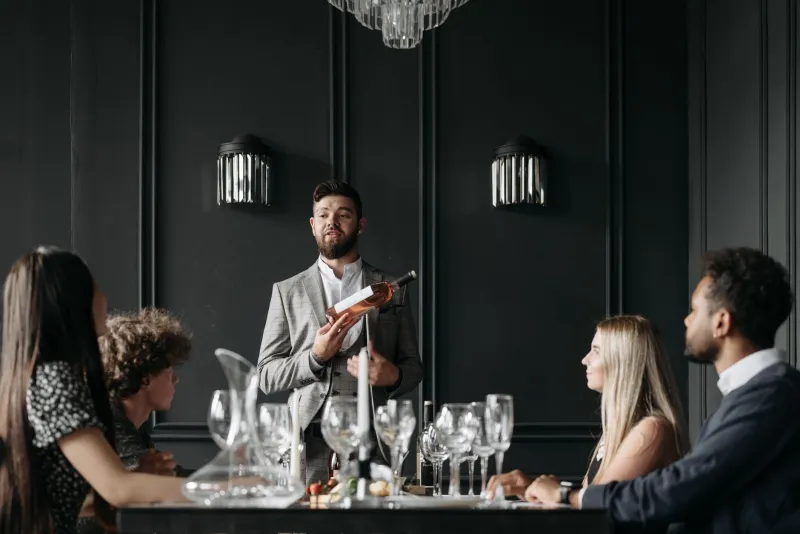
How does the founder handle the menu — with confidence and decisiveness, or with prolonged indecision that creates awkwardness for the table? Do they defer entirely on wine selection when asked for input, or do they engage with an informed opinion? When a conversational lull arrives, do they fill it with substance or default to nervous chatter? Do they check their phone during the meal?
None of these moments, taken individually, will make or break a deal. Collectively, however, they compose a portrait of how a founder carries themselves when the environment is not entirely within their control. That portrait matters enormously to an investor who is considering placing significant capital — and their own professional reputation — behind this individual.
Preparing for the Table Without Losing Authenticity
For founders who understand that business dinners function as extended evaluation events, the natural instinct may be to prepare for them with the same rigor applied to a formal pitch. That impulse is worth tempering.
The behaviors investors find most compelling at the dinner table — genuine respect for others, intellectual curiosity, composure under pressure, the ability to hold a position with confidence — are not traits that can be credibly manufactured for a single evening. They are the product of sustained self-awareness and intentional leadership development.
What founders can do is approach the business dinner with full presence: minimizing distractions, engaging with genuine interest, and recognizing that the evening is an opportunity to demonstrate the kind of person they are when no one is grading them on a rubric. Because, of course, someone is.
The Banquet Table as the Final Frontier of Trust
At events where investors and founders gather — whether intimate dinners or large-scale business banquets — the dynamics described here play out across dozens of tables simultaneously. The shared meal remains one of the few business contexts that cannot be fully optimized or automated, and that is precisely why it retains such value in the investment community.
For founders seeking capital, understanding the investor's perspective at the dinner table is not about gaming the process. It is about recognizing that the most durable business relationships are built on trust, and trust is formed — or forfeited — in the unguarded moments between bites.