Momentum at the Table: Decoding the Rare Conversations That Turn Into Commitments Before the Check Arrives

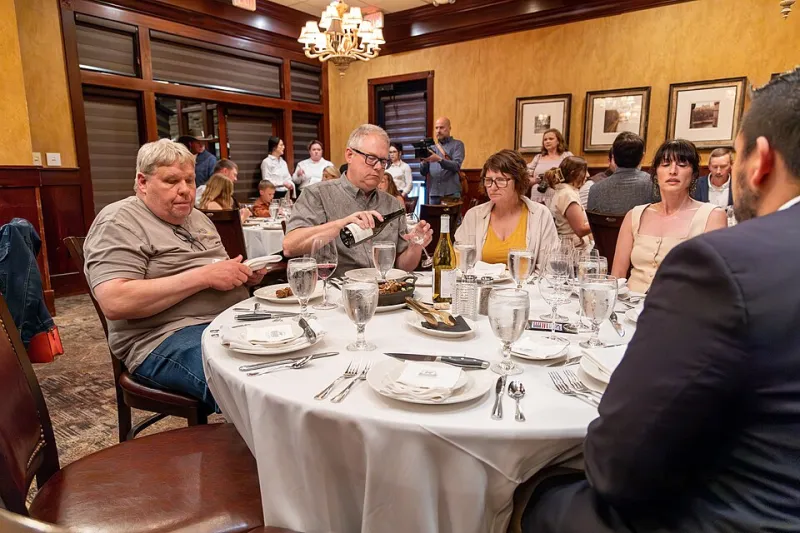
Photo: two business executives in serious conversation at upscale dinner table, via img.freepik.com
Every experienced dealmaker can recall at least one evening when the conversation moved differently. The rhythm was not the usual polite exchange of credentials and elevator pitches. Something shifted—a candid admission, a shared frustration, a moment of genuine mutual recognition—and by the time the dessert course was cleared, both parties were already discussing next steps that neither had arrived expecting to take.
These conversations are rare. They are also, contrary to popular belief, not entirely unpredictable. The conditions that produce accelerated commitment at the dinner table follow recognizable patterns, and the business leaders who understand those patterns are positioned to recognize—and catalyze—the windows of opportunity when they open.
Why Most Banquet Conversations Stall
To understand why certain conversations accelerate, it helps to first diagnose why most do not.
The default mode of business networking conversation is fundamentally defensive. Both parties are simultaneously managing impressions, evaluating the other's credibility, and protecting their own time and attention. The conversation proceeds along a well-worn track: background, current role, company overview, vague expressions of mutual interest, and an exchange of contact information that signals the end of the interaction.
This format produces familiarity without depth. The participants learn enough about each other to recognize a name in a future email, but not enough to generate the kind of trust that precedes a genuine commitment. The follow-up, if it comes at all, must rebuild the entire relational foundation from a shallow starting point—and most follow-ups do not survive that effort.
Accelerated conversations break this pattern. They do so through mechanisms that are specific, identifiable, and in many cases, deliberately triggerable.
Shared Vulnerability as a Catalyst
The most consistent accelerant in high-velocity banquet conversations is the moment of shared vulnerability—when one party departs from the curated version of their professional story and acknowledges a genuine challenge, uncertainty, or failure.
This departure is rarely calculated in the moment. It tends to arise when the conversational environment feels safe enough to support candor—when the other party has demonstrated genuine curiosity rather than transactional interest, or when the setting itself (the intimacy of a shared meal, the informality of a post-dinner cocktail) lowers the usual defensive posture.
What happens next is predictable: the recipient of the vulnerable disclosure almost always responds in kind. This reciprocal candor—what psychologists refer to as self-disclosure reciprocity—collapses the trust timeline dramatically. Two people who have each revealed something real about their professional lives are no longer strangers with overlapping interests. They are potential allies who have already demonstrated a willingness to be honest with each other. That foundation supports commitment in a way that polished credential-sharing simply cannot.
For leaders who attend business banquets regularly, the practical implication is clear: the willingness to speak candidly about genuine challenges—not performatively, but authentically—is one of the most powerful tools available for accelerating a conversation toward productive outcomes.
The Role of Mutual Problem-Solving
Another structural feature of high-velocity banquet conversations is the emergence of a shared problem that both parties have a stake in solving.
When a conversation shifts from the exchange of information to the collaborative exploration of a specific challenge, the dynamic changes entirely. Both participants become invested in the outcome of the conversation itself, not merely in the impression they are making. Ideas begin to flow. The pace accelerates. The conversation develops its own momentum, and the natural conclusion of that momentum is a commitment to continue the work that has already begun.
This is why the most productive business banquet conversations often sound less like networking exchanges and more like working sessions. The participants are not pitching to each other—they are thinking together. And the commitment that follows is not a courtesy; it is the logical continuation of a process that has already delivered value.
Experienced networkers recognize this shift when it occurs and lean into it rather than retreating to the safer territory of credential exchange. They ask questions that deepen the problem-solving conversation rather than redirect it toward their own agenda. They contribute ideas generously, without immediately framing those ideas as services to be purchased or partnerships to be formalized. The formalization comes later—and it comes naturally, because both parties already know the collaboration produces results.
Third-Party Validation and the Credibility Shortcut
A third mechanism that accelerates banquet conversations toward commitment is the introduction of a shared, trusted third party—someone both participants know and respect—whose implicit endorsement of the relationship creates a credibility shortcut that would otherwise take months to build.
This is one of the reasons that curated guest lists and intentional introductions from event hosts carry such disproportionate value. When a host who is trusted by both parties brings two people together with a specific framing—"You two need to talk because you're both navigating the same challenge in the same market"—the conversation begins with a level of mutual credibility that cold introductions cannot replicate.
The same dynamic operates when a mutual connection is surfaced organically during the conversation. The discovery that both parties are trusted by someone the other respects functions as an instant credibility transfer. The conversation accelerates because the usual vetting process has been partially completed by proxy.
Recognizing and Protecting the Window
The most important skill in high-velocity deal conversations is recognizing when the window has opened—and protecting it from the forces that typically close it.
The primary threat to an accelerating conversation is the social dynamics of the room itself. A third party joins the table. The host announces the next course. Someone checks their phone and the thread is broken. The momentum that took forty minutes to build dissipates in forty seconds.
Elite networkers protect the window through a combination of spatial positioning and conversational discipline. They find a way to continue the conversation in a less interrupted setting—a quieter corner, a brief walk to the bar, an agreement to step outside for a moment. They make explicit what has been implicit: "I want to make sure we finish this conversation before the evening ends." That statement, simple as it is, signals to the other party that the conversation has been recognized as valuable—and that recognition itself deepens the commitment.
After the Banquet: Preserving Velocity
The commitment made at the dinner table must be honored immediately to survive. The follow-up communication that arrives within twelve hours of the event carries the full weight of the momentum generated during the conversation. The message that arrives four days later carries almost none of it.
High-velocity conversations produce high-velocity obligations. The founders and investors who capitalize on these rare windows understand that the work does not end when the evening does—it simply moves to a different venue. The banquet table is where the relationship begins. The commitment made there is the first test of whether both parties intend to honor what was built.
At Business Builders Banquet, these are the conversations worth attending for—not the card exchanges, not the rehearsed pitches, but the rare and electric moments when two people sit down as strangers and stand up as partners. Understanding what creates those moments is not a soft skill. It is a strategic imperative.