Sit Where It Counts: The Unspoken Art of Table Positioning at High-Stakes Business Banquets
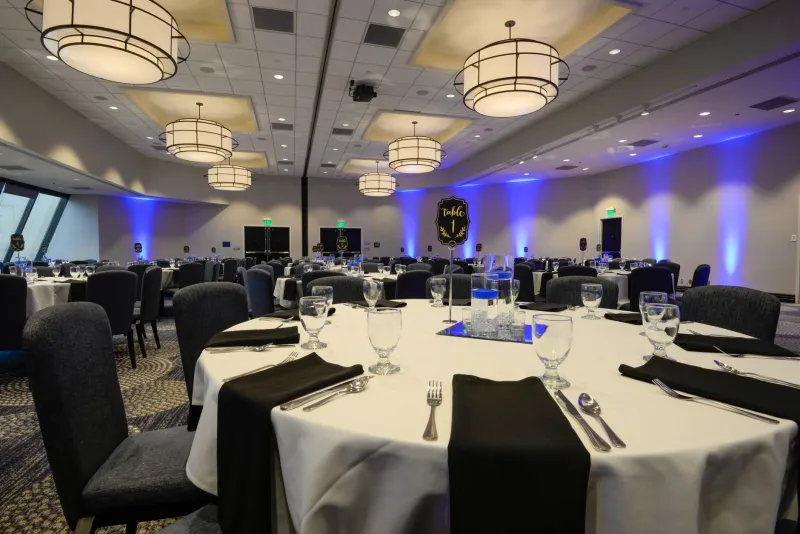
Long before the first course is served, before a single business card changes hands, the most consequential decision of your evening may already be made. Where you sit at a formal business banquet is not a trivial logistical detail. It is, for those who understand its implications, a deliberate act of professional strategy.
Seasoned entrepreneurs and corporate leaders who frequent the circuit of high-profile dinners, investor summits, and industry galas have quietly mastered this discipline. They understand that proximity breeds conversation, that conversation builds rapport, and that rapport — cultivated over a well-set table — can accelerate deals that months of email exchanges never could. For those still leaving their seat to chance, the opportunity cost is significant.
The Room Is a Map — Read It Before You Enter
Arriving early to a business banquet is not merely a matter of courtesy. It is reconnaissance. Professional event strategists consistently advise that the thirty minutes before a formal dinner begins offer an intelligence window that most attendees squander by lingering at the bar or checking their phones.
Walk the room with intention. Note where the host or organizing committee has placed themselves. Identify tables nearest to the venue's natural focal point — typically the stage, podium, or head table — as these positions tend to attract senior decision-makers who prefer visibility and access. Observe the flow of foot traffic. High-traffic corridors near the entrance and the bar tend to generate organic conversation before guests are seated, making them fertile ground for initial introductions that you can then convert into deliberate table proximity.
Many experienced attendees at conferences and leadership summits across cities like New York, Chicago, and San Francisco treat this pre-dinner scan as non-negotiable preparation. The room layout is a map. Learning to read it fluently is among the most underrated skills in professional networking.
Leverage the Host Relationship — Diplomatically
Seating charts at formal banquets rarely materialize without human input, and that human is almost always someone you can reach. Whether the event is organized by a chamber of commerce, a venture capital firm, or a corporate sponsor, there is an individual — or a small team — with authority over where guests are placed.
Building a genuine relationship with event organizers well before the evening in question is not manipulation; it is smart relationship management. Reach out in the days preceding the event to express enthusiasm, offer assistance, or simply acknowledge the effort involved in producing the program. When appropriate, make a tactful, specific request. Rather than asking to sit beside a particular high-profile investor in a manner that might seem opportunistic, consider framing your request around shared professional interests: "I work extensively in the renewable energy sector and understand that several leaders from that space will be attending — I'd be grateful if the seating could reflect that alignment."
Event professionals are, by nature, problem-solvers. A well-framed, considerate request gives them a puzzle to solve rather than a demand to resist. The result, more often than not, is a seat that serves your objectives.
The Geometry of Influence at a Round Table
Most formal banquet settings favor round tables, a configuration that carries its own social geometry. Behavioral researchers who study group dynamics have long noted that individuals seated directly across from one another at circular tables engage in more sustained eye contact and direct dialogue than those seated at angles. The individual to your immediate left and right, meanwhile, becomes your most natural conversation partner simply by virtue of physical proximity.
For entrepreneurs and executives attending events at Business Builders Banquet-style gatherings — where the explicit goal is meaningful professional connection — this geometry demands attention. If you know that a target contact will be seated at your table, position yourself either directly across or one seat to their side rather than beside them. The slight distance created by the across-the-table arrangement invites a more formal, substantive exchange, while the adjacent seat lends itself to quieter, more confidential dialogue.
When the seating chart is open or informally arranged, move with purpose and without hesitation. Lingering near a table while scanning the room signals uncertainty. Placing your portfolio, jacket, or a simple place card with your name communicates ownership of the space and deters others from inadvertently disrupting your positioning.
Reading Social Dynamics in Real Time
Even the most carefully engineered seat is only as valuable as the social intelligence applied once you occupy it. The dinner table is a living environment, and the dynamics shift course by course.
Begin the evening by listening more than you speak. This is not passivity — it is data collection. Identify who commands the table's attention naturally. Note who defers to whom, which guests are most animated when discussing their work, and which individuals appear to be managing multiple conversations simultaneously. These observations will reveal the informal hierarchy of the table, which often differs from the formal hierarchy suggested by job titles.
Experienced dealmakers frequently advise timing business-oriented conversation to the middle courses of a formal dinner, when guests have settled into comfort but the evening has not yet drifted toward social pleasantries and dessert. The transition between the first and second course — when plates are cleared and wine is refreshed — creates a natural conversational reset that skilled networkers exploit to redirect dialogue toward professional territory.
Avoid the temptation to introduce a pitch or a direct business proposition too early. Instead, lead with curiosity. Ask substantive questions about the other person's current priorities, recent challenges, or upcoming initiatives. The goal of the banquet table is not to close a deal over the entrée. It is to generate enough genuine connection that the follow-up call or meeting becomes an anticipated event rather than an unsolicited intrusion.
Positioning as a Long-Term Practice
Those who treat table positioning as a one-time tactic miss its deeper value. Over the course of multiple events — whether regional business galas, national industry conferences, or invitation-only investor dinners — a reputation for being a thoughtful, engaged, and strategically present professional is itself a form of positioning.
Venue staff, event coordinators, and fellow attendees notice the individuals who arrive prepared, engage authentically, and leave having contributed meaningfully to the evening's conversations. That reputation, built incrementally across many tables and many cities, becomes its own form of influence — one that eventually makes the seat you occupy less a matter of strategy and more a matter of earned standing.
At its core, the discipline of table positioning is an expression of respect: respect for the value of other people's time, respect for the occasion, and respect for the rare and genuine opportunity that a shared meal among serious professionals represents. Master it, and every banquet you attend becomes less a social obligation and more a carefully set stage for the relationships that will define your next chapter.