The Art of the Unplanned Meeting: How Elite Networkers Engineer Chance at Business Events

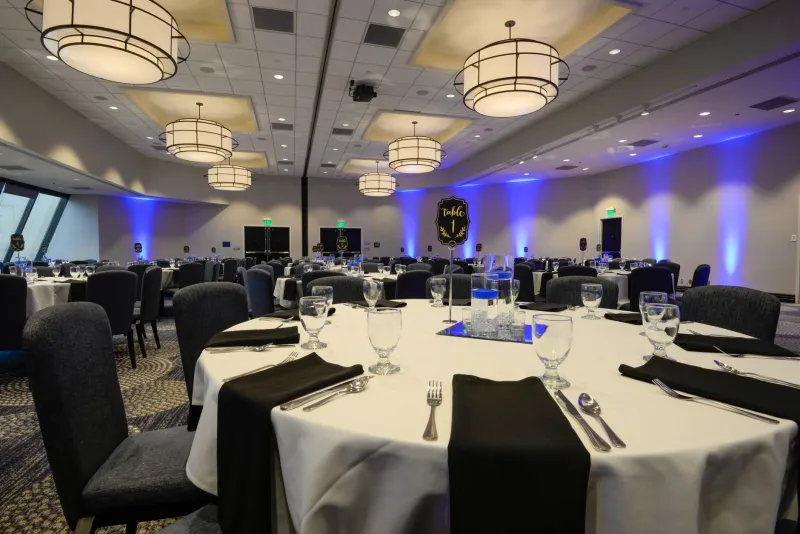
Photo: business professionals networking at conference cocktail reception, via arabbnews.com
Ask any veteran of the American business conference circuit to identify the introduction that changed their career, and the story they tell will almost always begin with a version of the same phrase: "We just happened to end up at the same place at the same time."
What they are describing, in most cases, is not an accident. It is the visible outcome of an invisible system.
The professionals who consistently emerge from networking events with the most consequential new relationships are not the loudest voices in the room, the most aggressive card-distributors, or the most polished presenters at the podium. They are the ones who have studied the geometry of the event itself — the flow of human movement, the architecture of social gravity, the predictable rhythms of how people gather, disperse, and pause — and have positioned themselves accordingly.
Understanding Venue Flow as a Strategic Resource
Every business event has a physical logic. Attendees move through space in patterns that are far more predictable than they appear. Registration tables create bottlenecks that generate organic queues. Coffee stations become recurring gathering points across a full-day conference. The space between the main hall and the restrooms functions as an involuntary decompression zone where people slow down, make eye contact, and become briefly available.
The cocktail hour presents perhaps the most reliable opportunity in the entire event architecture. Research on crowd behavior in semi-structured social settings consistently finds that individuals gravitate toward the periphery of a room before migrating toward its center. The professional who positions themselves near the bar — not at it, but adjacent to the natural flow of movement toward it — will encounter a disproportionate number of attendees in the specific psychological state that is most conducive to new introductions: relaxed, slightly purposeless, and openly receptive.
This is not manipulation. It is environmental intelligence applied to the challenge of meeting the right people.
Mapping the Room Before the Event Begins
Elite networkers rarely arrive at a business banquet or conference without having already developed a spatial model of the venue. This preparation takes many forms, but the most effective practitioners share several common practices.
First, they obtain a floor plan or arrive early enough to conduct a deliberate walkthrough. They identify the highest-traffic corridors, the natural conversation pockets, the areas where people congregate voluntarily versus those they simply pass through. A hallway leading to a private breakout room, for example, functions very differently from a main thoroughfare — it offers a smaller, more self-selected audience and a quieter acoustic environment that supports substantive exchange.
Second, they study the event program with a geographic lens. If a featured speaker is known to be of particular interest to the investor they are hoping to meet, they identify where that speaker will likely be accessible — typically near the entrance to the main hall in the ten minutes before a keynote begins, or at the perimeter of the room immediately following a panel discussion.
Third, they consider timing as a variable they can control. Arriving at a pre-dinner reception twenty minutes before the announced start time places you in a room that is still intimate, where introductions are easy and conversations are unhurried. Arriving precisely on time deposits you into a crowd that has already begun to cluster, making entry into established conversations structurally more difficult.
The Geometry of the Productive Pause
One of the most underutilized positioning techniques in the professional networking repertoire is what experienced event strategists refer to as the productive pause — the deliberate act of stopping in a high-visibility, high-traffic location and appearing unhurried.
In practical terms, this means selecting a spot that places you in the natural sightline of arriving attendees, maintaining an open body posture, and holding a single drink or a conference program — anything that provides a natural visual anchor without creating the impression of preoccupation. This configuration makes you simultaneously approachable and memorable. People register your presence. They note that you appear comfortable and unhurried. The social barrier to approaching you is lower than it would be if you were in motion or engaged with a device.
The productive pause is particularly effective in the fifteen minutes following a keynote address, when attendees are processing what they have just heard and are primed for the kind of idea-exchange that leads to genuine connection. Position yourself near the exit of the main hall, and you will find that conversations begin themselves.
Case Studies in Strategic Serendipity
The annals of American business are populated with partnerships that trace their origins to what their participants describe as fortunate coincidence. A closer examination frequently reveals a more deliberate architecture.
Consider the well-documented account of a prominent Silicon Valley venture firm whose founding partners first connected at a technology conference in San Jose in the early 2000s. The conventional version of the story emphasizes the chance nature of their meeting at a lunch buffet. The less-told version, shared by one of the partners in a 2019 interview, reveals that he had identified the other's firm as a potential strategic ally three months earlier, had researched the conference's attendee list, and had specifically positioned himself near the buffet at a time he calculated the other would be moving through the space — based on the other's known habit of attending morning sessions and eating early.
The buffet line encounter was real. The serendipity was not.
This pattern repeats across industries and deal sizes. The common thread is not luck. It is preparation applied at the level of physical space and human behavior, rather than merely at the level of talking points and pitch materials.
The Ethics of Engineered Encounters
A reasonable question arises at this point: is there something disingenuous about engineering what appears to be a chance meeting? The answer, on reflection, is no — provided the encounter itself is conducted with genuine integrity.
Every professional curates their behavior in social settings. Choosing where to stand, when to arrive, and how to position yourself for productive introductions is simply the spatial equivalent of preparing thoughtful questions or researching a potential partner's background before a meeting. The value of the relationship that follows is determined entirely by the authenticity of the exchange, not by the intentionality of the positioning that preceded it.
The most enduring business relationships in American commerce began, in many cases, with a deliberate act of proximity. What sustained them was character, competence, and mutual value — none of which can be engineered.
Building the System That Builds the Relationships
For professionals who attend multiple events per year, the real competitive advantage lies in converting these individual positioning techniques into a repeatable practice. After each event, document what worked: which locations generated the most productive encounters, which timing windows proved most valuable, which conversation openers led most naturally to substantive exchange.
Over time, this documentation becomes a proprietary playbook — a personalized map of the social physics that govern the environments where your most important relationships are likely to be formed.
The banquet table, the conference hall, the cocktail reception: these are not passive stages on which business relationships happen to unfold. They are environments that reward the professionals who have taken the time to understand them.
The next deal that appears to find you by accident may, in fact, have been waiting exactly where you placed yourself.