Eyes Across the Room: The Underestimated Intelligence Gathered From Observing the Margins of Any Business Banquet

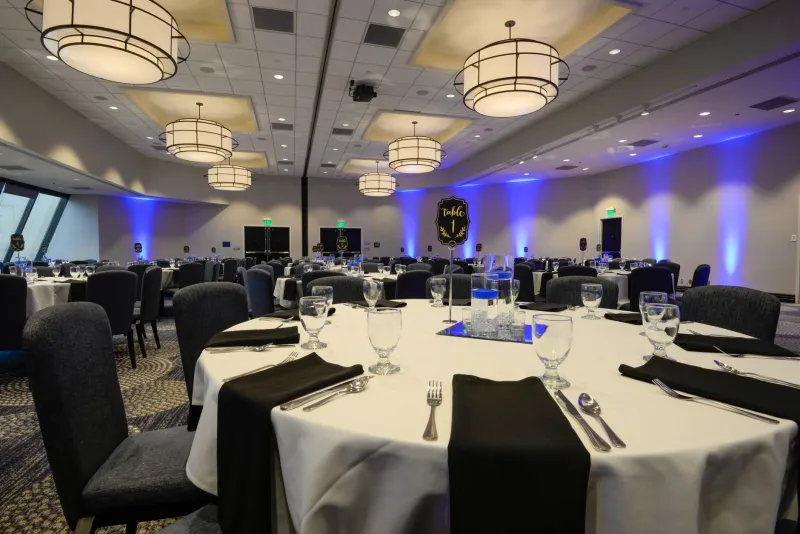
Photo: elegant business banquet hall with guests networking formal dinner event, via static3.bigstockphoto.com
There is an old saying among experienced negotiators: the most important information in any room is the information no one intended to give you. At a formal business banquet, that information is everywhere. It is in the choices people make before the first course arrives. It is in how they interact with the staff who move quietly through the room. It is in the accumulated behavioral data of an evening that most attendees spend entirely focused on the conversation directly in front of them.
The strategist who learns to read the room — not just their table, but the entire room — operates with a significant and largely invisible advantage.
The Room as a Data Environment
Every business banquet is, at its core, a controlled social environment. Attendees have dressed deliberately, prepared their talking points, and arrived with intentions — whether to impress, to close, to recruit, or simply to be seen. But the effort required to maintain a professional presentation is finite. People tire. Guards lower. And in the unguarded moments, behavior becomes remarkably candid.
The challenge is that most networkers spend the evening looking inward — focused on their own performance, their own conversations, their own objectives. They are so engaged in projecting a particular image that they have no bandwidth left for observation. This is understandable. It is also a strategic error.
The attendee who periodically widens their aperture — who takes a moment between courses to survey the room with genuine analytical attention — accumulates a layer of intelligence that their peers simply do not have.
What Service Patterns Reveal
Banquet staff are among the most perceptive observers in any room. They move through the space continuously, they are largely invisible to guests preoccupied with their own conversations, and they witness behavior that principals would never display if they believed they were being watched.
For the attentive guest, the patterns of service offer a quiet but consistent stream of signal. Consider the choices made around the bar or the wine service. The executive who declines alcohol entirely at an industry dinner attended by heavy drinkers is communicating something about discipline, about the importance they assign to the evening, or about a professional context that requires them to remain sharp. The guest who orders a second glass before the appetizer course has been cleared is communicating something different — and an experienced observer draws their own conclusions about urgency, comfort level, or the state of their current negotiations.
These are not moral judgments. They are data points. The seasoned strategist does not assign value to the choice itself; they note the pattern and file it alongside everything else they observe about that individual.
The Check Request as a Behavioral Signal
In restaurant settings where business dinners unfold without a fixed event structure, one of the most revealing moments is the request for the check. Who initiates it, and how, tells a practiced observer a great deal about the power dynamics at the table.
The person who signals for the check without consulting the group is asserting authority — consciously or not. The person who reaches for it quickly, before conversation has naturally concluded, is often managing anxiety about something: cost, time, or the terms of the relationship being negotiated across the table. The person who conspicuously does not reach for it — who allows the moment to extend without resolution — is either comfortable in a position of seniority or is deliberately testing the other party.
At a hosted banquet with a fixed program, the equivalent signals appear in how guests respond to the evening's pacing. Those who appear restless during the structured portions, who check their phones between courses, or who seek out side conversations during designated presentation segments are broadcasting their priorities with unusual clarity.
Conversation Dominance and What It Costs
Every table at a business banquet has at least one person who dominates the conversation. This is not always the most powerful person at the table. In fact, experienced dealmakers have long noted that the individuals who speak most frequently and at greatest length in group dinner settings are often compensating for an absence of leverage rather than expressing an abundance of it.
The person who controls the table through volume — who fills every silence, redirects every topic back to their own narrative, and subtly marginalizes quieter voices — is performing. The performance is often compelling. It can even be entertaining. But it tends to reveal more about insecurity than influence.
Conversely, the executive who speaks infrequently, whose contributions are brief and precise, and who appears entirely comfortable allowing others to carry the conversational weight is typically operating from a position of genuine security. They have nothing to prove. They are there to learn, to assess, and to decide — not to be evaluated.
This is a pattern that repeats across business banquets from San Francisco to Boston, regardless of industry. The loudest voice at the table is rarely the one writing the largest check.
Arrival and Departure as Strategic Signals
The margins of the evening — the moments before the formal program begins and after it concludes — are among the richest sources of behavioral intelligence available to the attentive observer.
Who arrives early, and how do they spend that time? The executive who arrives fifteen minutes before the event begins and immediately positions themselves near the entrance — greeting guests as they arrive, orienting the room's social geography before most people have had a chance to settle — is demonstrating an intentionality that deserves notice. They are not there to be received. They are there to orchestrate.
Who lingers after the formal conclusion? The guests who remain when the evening's program has ended are, almost without exception, the guests for whom the evening has produced genuine interest — either in a conversation that is still unfolding or in an opportunity they have not yet fully evaluated. The person who departs precisely at the scheduled end time has completed a transaction. The person who stays is still negotiating.
Applying Peripheral Intelligence Responsibly
It bears stating clearly: the purpose of behavioral observation at a business banquet is not surveillance or manipulation. It is context. The executive who appears distracted during dinner may be managing a legitimate crisis unrelated to the room. The guest who orders only water may simply prefer it. No single data point carries sufficient weight to draw a firm conclusion.
What peripheral intelligence provides is texture — a richer, more dimensional understanding of the people in the room than the curated professional presentation they have prepared for public consumption. That texture, layered over time and across multiple interactions, produces genuine insight.
The most effective strategists at any Business Builders Banquet event understand that the room itself is a resource. The conversations they are not part of, the choices being made at tables they cannot hear, and the small behavioral signals produced by an evening of social and professional pressure all constitute a form of intelligence that most attendees never think to collect.
Those who do collect it — patiently, non-judgmentally, and with the discipline to integrate it into a coherent picture — consistently leave the evening knowing more than they arrived with. And in business, knowing more is almost always worth more.