Stop Waiting for a Seat at the Table — Build the Table Yourself
There is an unspoken hierarchy at every business banquet, conference dinner, and executive networking event in America. It does not follow net worth, title, or tenure. It follows a simpler principle: the person who issued the invitations holds the room. Everyone else, regardless of their credentials, is a guest responding to someone else's vision.
For entrepreneurs conditioned to pursue opportunity — to seek out the right conference, angle for the right introduction, or secure a coveted seat near the keynote speaker — this is a disorienting truth. The deal-making advantage does not belong to the most aggressive networker in the room. It belongs to the individual who curated the room itself.
The strategic case for hosting is not built on ego. It is built on psychology, positioning, and the compounding returns of genuine hospitality deployed with purpose.
The Psychology of the Host
When you host, the social contract shifts in your favor before a single conversation begins. Guests arrive with an implicit sense of obligation — not in a transactional sense, but in the deeply human way that receiving generosity inclines people toward goodwill. Behavioral economists refer to this as reciprocity bias, and it operates just as powerfully in a private dining room at a Chicago steakhouse as it does in a laboratory setting.
Beyond reciprocity, hosting confers what organizational psychologists call "situational authority" — the perception of leadership derived not from a formal title but from environmental control. You selected the venue. You shaped the guest list. You determined the agenda, the seating arrangement, and the tone of the evening. These decisions, invisible to most attendees, communicate competence, taste, and command. Investors and senior executives, who are accustomed to reading rooms professionally, register this instantly.
The host does not need to pitch. The host presides. And in business, presiding is almost always more valuable than pitching.
Intimate Power Dinner vs. Large-Scale Event: Choosing Your Format
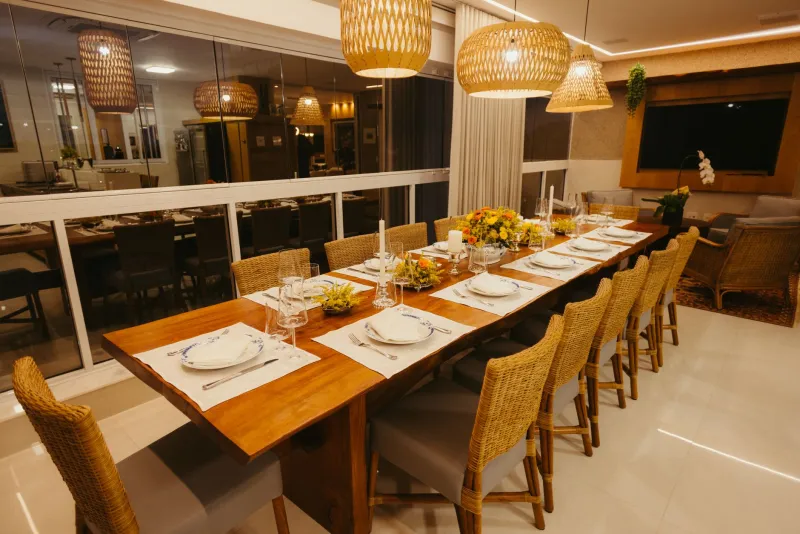
Not every hosting opportunity demands a ballroom and a catering staff of twenty. In fact, some of the most consequential business relationships in American entrepreneurship have been forged around tables of eight or fewer.
The intimate power dinner — typically six to twelve carefully selected attendees at a private venue or upscale restaurant — is the preferred format when the objective is depth over breadth. This structure allows the host to engineer meaningful cross-pollination: pairing a founder with a strategic investor, connecting a corporate buyer with an emerging supplier, or introducing two executives whose adjacent industries could yield a genuine partnership. The intimacy of the format creates psychological safety, encouraging candor that a larger event rarely produces.
The large-scale networking banquet, by contrast, serves a different strategic purpose. It establishes the host as a convener of consequence — a figure whose sphere of influence is broad enough to attract a room full of decision-makers. For entrepreneurs building brand authority in their sector, or executives positioning themselves for board roles or advisory opportunities, the large-format event signals relevance at scale. The tradeoff is depth: relationships initiated in a crowd require deliberate follow-up to mature.
The most sophisticated hosts do not choose between these formats — they sequence them. A well-executed large conference dinner builds the host's reputation and expands their network. The intimate follow-up dinner, extended to the highest-value attendees from the larger event, is where the substantive business actually gets done.
Real-World Precedents: Hospitality as Business Development
This approach has deep roots in American business culture. Long before the term "thought leadership" entered the corporate lexicon, industrialists and financiers understood that controlling the social environment was tantamount to controlling the conversation.
More recently, founders in the technology and venture capital sectors have formalized this instinct. In Silicon Valley and New York's startup ecosystem, private dinners hosted by founders — often held in rented private dining rooms or even well-appointed home settings — have become recognized deal-making venues. The informality of the setting, combined with the deliberateness of the guest curation, creates an atmosphere that formal pitch meetings simply cannot replicate.
Consider the founder who, struggling to secure meetings with a specific category of investor, pivoted her strategy entirely. Rather than continuing to request introductions through intermediaries, she organized a quarterly dinner series focused on a topic of genuine relevance to her target investors: the regulatory future of her industry. She positioned herself not as a fundraiser but as an informed convener. Within three cycles of the dinner series, two attendees had become investors, and a third had introduced her to a strategic acquirer. The dinners cost her a fraction of what a formal roadshow would have required — and delivered relationships of substantially greater depth.
This is not an isolated case. It is a pattern recognizable to anyone who has studied how business relationships actually form versus how we are taught to pursue them.
Practical Execution: What Separates a Strategic Host from a Generous One
Generosity alone does not produce strategic outcomes. The entrepreneur who hosts without intention is simply funding other people's networking. The distinction lies in design.
A strategically executed business banquet begins with a clear objective — not a hidden agenda, but a defined purpose that guides every subsequent decision. Who needs to be in this room? What shared interest or challenge will anchor the conversation? What outcome, even if loosely defined, would constitute success?
From that objective, the guest list is built with the same rigor one might apply to a board composition or a hiring decision. Diversity of perspective matters, as does a thoughtful balance of seniority levels — an all-CEO dinner can calcify into competitive posturing, while a deliberately mixed room tends to generate more generative dialogue.
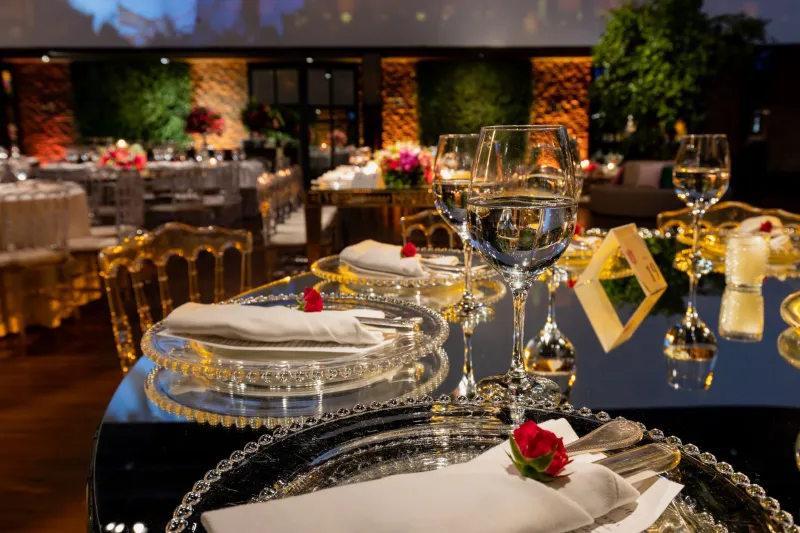
Venue selection is not cosmetic. The physical environment communicates the host's standards and signals the register of the event. A private dining room at a respected independent restaurant conveys discernment. A hotel ballroom with banquet chairs conveys volume. Neither is inherently superior — but both send a message, and the host is responsible for ensuring that message is intentional.
Finally, the follow-through distinguishes hosts who build lasting business value from those who simply throw good parties. A personalized note within forty-eight hours, a specific introduction made on behalf of two attendees, or a curated summary of the evening's key discussion themes — these gestures extend the value of the gathering well beyond the room itself.
The Contrarian Imperative
The conventional wisdom in business networking instructs professionals to attend more events, collect more contacts, and follow up more aggressively. This advice is not wrong, exactly — but it positions every practitioner as a supplicant, competing for attention in rooms designed by someone else.
The contrarian move — and the one that consistently produces asymmetric returns — is to stop seeking invitations and start issuing them. To stop optimizing your behavior within someone else's event structure and start building the structure itself.
At Business Builders Banquet, we have long held that the most consequential business relationships are not found at events — they are built through them. The entrepreneur who steps into the host role does not simply gain access to a room. They gain authorship of it. And in business, as in most consequential endeavors, authorship is the ultimate advantage.
The table is not waiting to be found. It is waiting to be built. The only question is whether you will be the one to build it.