When You Own the Table, You Own the Outcome: The Executive's Guide to Strategic Hosting at Business Banquets
When You Own the Table, You Own the Outcome: The Executive's Guide to Strategic Hosting at Business Banquets
There is a quiet truth that circulates among the most accomplished dealmakers in American business: the guest who impresses is memorable, but the host who orchestrates is unforgettable. When you transition from attendee to architect — from the person who accepts an invitation to the person who extends one — you fundamentally alter the geometry of power in the room.
At Business Builders Banquet, where leaders convene and deals are forged, we have observed this dynamic play out with remarkable consistency. The executives who close the most consequential agreements are not always the loudest voices at the table. They are, far more often, the individuals who chose who sat down in the first place.
The Architecture of Obligation
Hosting a business banquet is not merely a logistical exercise. It is an act of deliberate social engineering — and that phrase carries no negative connotation in this context. When you invite someone to a meal you have arranged, you initiate what behavioral economists call a reciprocity loop. The guest arrives with an implicit understanding that something has been invested on their behalf: time, capital, attention, and intention.
Top-tier executives across industries from private equity to technology have long recognized this dynamic. When a founder invites a prospective investor to a dinner she has curated — selecting the venue, the guest list, the menu, and the sequence of the evening — she is not simply offering hospitality. She is constructing an environment in which the investor's defenses lower, their curiosity elevates, and their sense of obligation quietly activates.
This is the architecture of obligation, and it begins before a single guest walks through the door.
Seating as Strategy
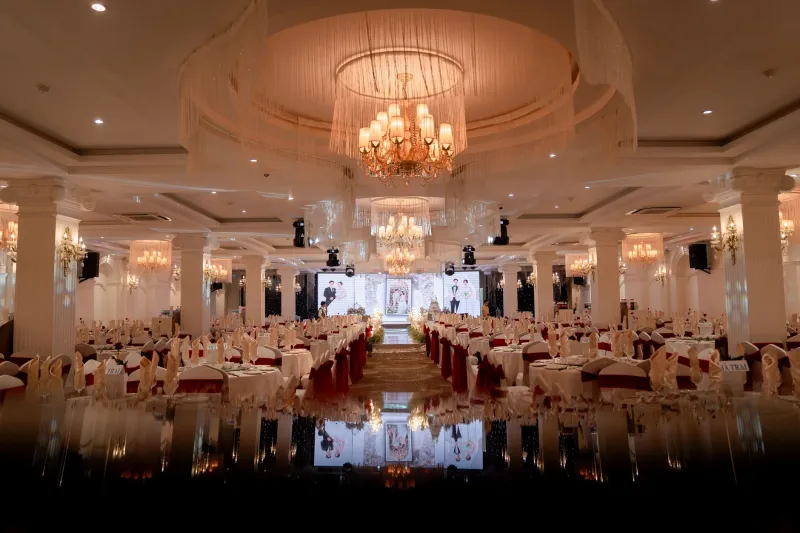
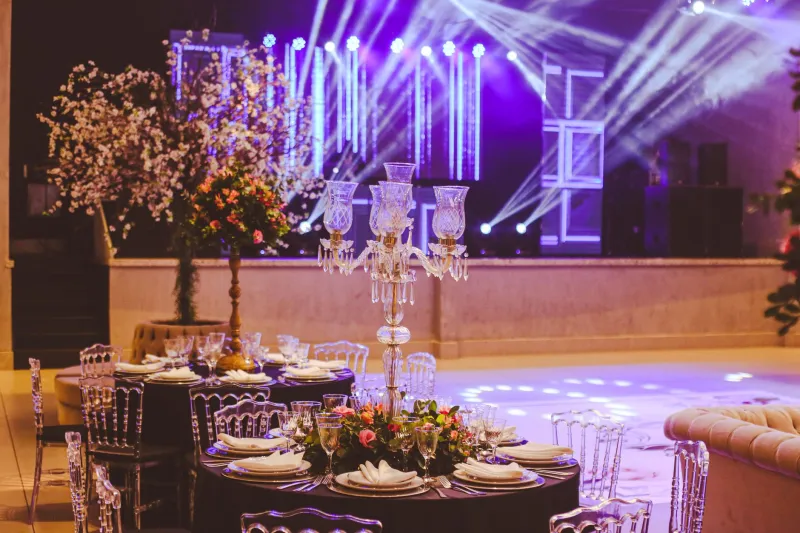
Among the most underestimated tools available to a strategic host is the seating chart. To the uninformed observer, a seating arrangement is a matter of comfort and logistics. To a seasoned business builder, it is a blueprint for conversation flow, alliance formation, and deal momentum.
Consider the placement of a key investor directly adjacent to a founder whose company represents a complementary portfolio opportunity. Or the deliberate positioning of a corporate development officer beside an entrepreneur whose exit timeline aligns with the acquirer's strategic roadmap. These are not coincidences — they are calculated placements that transform dinner conversation into productive business dialogue.
The empty chair, in particular, carries strategic weight. Leaving a seat conspicuously vacant next to a high-value guest signals exclusivity and selectivity. It communicates that not everyone merits proximity to this individual — and when the right person is eventually guided to that seat, the implied endorsement is powerful.
Savvy hosts also consider diagonal sightlines. Guests seated across the table at a slight angle tend to engage in more extended, substantive conversation than those seated directly opposite, where the formality of eye contact can inhibit candor. These subtle spatial decisions accumulate into an environment that either accelerates or inhibits the deal-making process.
Controlling the Narrative Through Agenda Design
Every business banquet has a narrative arc, whether its host acknowledges it or not. The strategic host does not leave this arc to chance. From the moment guests arrive through the cocktail reception to the final exchange over dessert, the evening should follow a deliberate progression that mirrors the structure of a well-constructed business case.
The opening — cocktails and light introductions — functions as the trust-building phase. This is not the moment for pitch decks or term sheets. It is the moment for establishing personal resonance, identifying shared context, and allowing guests to relax into the environment you have created.
The seated dinner itself represents the relationship deepening phase. Thoughtful conversation starters, introduced naturally through the host's own dialogue or through pre-briefed table captains, guide guests toward topics that are both personally engaging and professionally relevant. A host might open a discussion about a recent development in the guest's industry — signaling that she has done her homework — before allowing the conversation to evolve organically toward areas of mutual commercial interest.
The post-dinner period — coffee, digestifs, the unhurried transition toward departure — is where the most consequential exchanges often occur. Guests are relaxed, the formal structure of the meal has dissolved, and the host has an opportunity for brief, private exchanges that plant seeds for follow-up meetings, term sheet conversations, or partnership discussions.
The Pre-Event Intelligence Framework for Hosts
Effective strategic hosting requires preparation that begins days, not hours, before the event. The following framework has been employed by executives who consistently convert banquet evenings into business outcomes.
Guest Profiling: Compile a concise intelligence brief on each attendee — their current business priorities, recent announcements, known relationships with other guests, and any publicly stated goals or challenges. This preparation allows the host to facilitate introductions that feel serendipitous but are, in fact, engineered.
Conversation Seeding: Identify two or three topics that are simultaneously relevant to multiple guests and likely to generate productive tension or shared enthusiasm. Brief a trusted colleague or co-host to introduce these topics at appropriate moments throughout the evening.
The Anchor Guest Strategy: Every well-designed business banquet benefits from an anchor guest — an individual whose reputation, accomplishments, or current relevance draws other attendees and elevates the perceived value of the invitation. Securing this individual early and building the guest list outward from their presence is a technique employed consistently by the most effective executive hosts in the country.
Exit Choreography: How guests depart matters as much as how they arrive. A strategic host positions herself near the exit to ensure a final, personal exchange with each key attendee — a moment that reinforces the relationship, establishes a clear next step, and leaves the guest with a sense of having been genuinely valued.
Transitioning from Attendee to Architect
For entrepreneurs who have spent years attending other people's banquets, the transition to host can feel daunting. The financial and logistical investment is real. But so is the return.
Begin modestly. A dinner for eight, hosted at a well-regarded restaurant in your city, with a carefully assembled guest list that includes two prospective investors, two peer entrepreneurs, and two connectors whose networks complement your own, is sufficient to begin building the hosting muscle. The objective is not grandeur — it is intentionality.
As your hosting practice matures, so too will your ability to design evenings that produce measurable business outcomes. You will develop an instinct for which combinations of guests generate productive chemistry, which venue atmospheres facilitate candor, and which conversational structures move relationships from introduction to agreement with the least friction.
The most powerful seat at any business banquet is not the one at the head of the table. It is the one that remains empty until the host decides — with full strategic deliberation — exactly who should fill it.
At Business Builders Banquet, that decision belongs to you.